

Redefining standards of cancer care
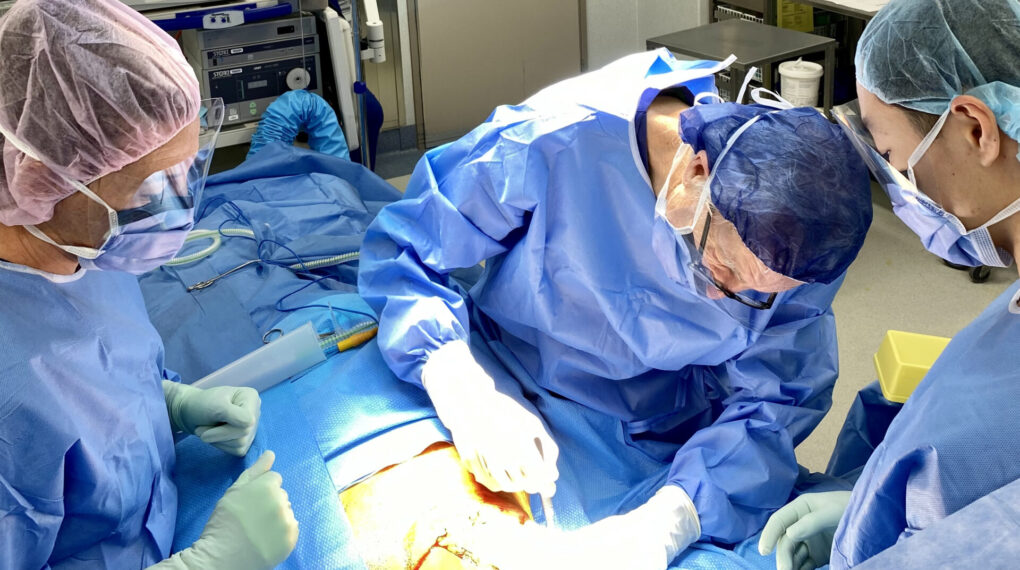
The Cabrini Monash University Department of Medical Oncology conducts a comprehensive portfolio of translational and clinical research across several cancer types.
The Department’s work in preclinical models and molecular genomics enable the delivery of personalised treatment strategies, while also supporting the discovery and development of new anti-cancer drugs. This commitment to patient-centric research extends to its integrative approach to cancer, developing innovations in patient monitoring, rehabilitation, and clinical decision-making.
Through its focus on impact, the Department implements research outcomes into clinical workflows, redefining standards of care for future patient populations.
Diseases
Breast Cancer
Gynaecologic Cancer
Haematologic Malignancies
Lung Cancer
Melanoma

Approaches
Clinical Trials
Exercise Oncology
Health Systems Optimisation
Molecular Genomics
Organoids and Spheroids
Patient-Reported Outcomes Measures
Research Themes
Health Informatics
Integrative Cancer
Precision Medicine
Translational
Department Researchers
Principal Investigators
Associate Professor Yoland Antill
Associate Professor Ben Brady
Dr Andrew Haydon
Dr Kirsten Herbert
Associate Professor Melita Kenealy
Dr Dilys Leung
Dr Ben Markman
Dr Shehara Mendis
Associate Professor David Pook
Professor Gary Richardson OAM
Dr Eva Zopf
Associate Investigators
Dr Michael Dickinson
Dr Lucy Gately
Dr Sanjeev Gill
Mr Peter Gregory
Associate Professor Ian Haines
Dr Despina Handiolias
Dr Henry Januszewicz
Jasveena Kaur
Clare Kennerley
Dr Sem Liew
Associate Professor Lara Lipton
Miss Joanna Morgan
Miss Christine Ooi
Professor Max Schwarz
Associate Professor Jeremy Shapiro
Dr Gaurav Srivastava
Dr Robert Stanley
Dr Karen Taylor
Dr Mark Voskoboynik
Dr Michelle White
Associate Professor Max Wolf
Interested in learning more?
Department Research Themes
Genomics-Led Precision Oncology
The rapid development of genomics technologies has led to a renewed understanding of cancer, enabling an unprecedented glimpse into the drivers of its genesis and progression at a molecular level. Leveraging these capabilities, patient-derived tumour samples are sequenced and annotated with clinical information to generate a comprehensive genomic profile, unique to each patient and their condition. From this, patients can be matched to effective therapies drawn from a national catalogue of clinical trials. These clinical services will be made available through the establishment of the Cabrini Precision Oncology Program, which will be the first of its kind for a private healthcare setting in Australia and pioneer the delivery of personalised cancer care for South-East Victoria.
Breast and Ovarian Cancer Organoids and Spheroids
Breast and ovarian cancers present complex challenges that vary with each patient, requiring treatment to align with individual conditions and needs. This requires preclinical models capable of capturing the complex features and dynamic interactions of tumours, allowing them to accurately predict patient responses to various therapies. Organoids and spheroids possess these abilities, with the Department having developed nationally recognised techniques for their generation in collaboration with the Monash Biomedicine Discovery Institute. The molecular insights achieved through these models not only allow treatment to be personalised, transforming conventional approaches, but also support the discovery and testing of newly-developed drugs for breast and ovarian cancer
Electronic Patient Reported Outcome Measures
Electronic Patient Reported Outcome Measures (ePROMs) are an innovative tool that enable patients to communicate symptoms and functionality in real-time. This allows clinicians to systemically monitor patients, enhancing both the quality and efficiency of care, while also facilitating greater patient-clinician communication. Current ePROMs platforms are limited by a lack of standardisation, which the Department aims to address through the development and implementation of an easy-to-use interface, accessed by patients through their mobile electronic device.
Exercise Oncology
Established in 2021 as part of the Cabrini Cancer Institute, the exercise oncology program examines the clinical benefits of exercise from the point of diagnosis through to survivorship. These studies assess the impact individualised and structured exercise prescriptions have for the physical and mental health of patients across various cancer types. This integrative approach to cancer provides a non-pharmaceutical solution for improved treatment tolerability, response, and recovery, with continued work towards a framework for implementation into standard oncological care.
Selected Publications
Oncogenic Pathways and Targeted Therapies in Ovarian Cancer.
Carolina Lliberos,* Gary Richardson,* and Antonella Papa.
biomolecules, May 2024
Tali Lang,* Sarah Jaboury,* Alexander West,* Jo O’Sullivan,* Kirsten Seletto,* Lucy Wilson,* Elizabeth Gleisner,* and Gary Richardson*
JCO Oncology Practice, September 2022
Kelcey A Bland*, Meinir Krishnasamy, Evelyn B Parr, Stella Mulder, Peter Martin, Luc J C van Loon, Prue Cormie, Natasha Michael, and Eva M Zopf*
BMC Palliative Care, May 2022
Nivolumab plus Cabozantinib versus Sunitinib for Advanced Renal-Cell Carcinoma
Toni K. Choueiri, Thomas Powles, Mauricio Burotto, Bernard Escudier, Maria T. Bourlon, Bogdan Zurawski, Victor M. Oyervides Juárez, James J. Hsieh, Umberto Basso, Amishi Y. Shah, Cristina Suárez, Alketa Hamzaj, Jeffrey C. Goh, Carlos Barrios, Martin Richardet, Camillo Porta, Rubén Kowalyszyn, Juan P. Feregrino, Jakub Żołnierek, David Pook,* Elizabeth R. Kessler, Yoshihiko Tomita, Ryuichi Mizuno, Jens Bedke, Joshua Zhang, Matthew A. Maurer, Burcin Simsek, Flavia Ejzykowicz, Gisela M. Schwab, Andrea B. Apolo, and Robert J. Motzer
The New England Journal of Medicine, March 2021
* denotes Cabrini researcher