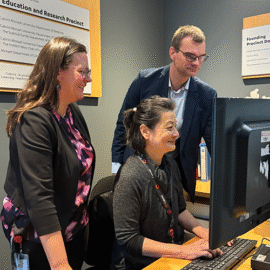


Unlocking the complexities of prostate cancer
The Department of Urology maintains a robust research portfolio addressing the most prevalent cancer amongst Australian men, prostate cancer.
Its dynamic research framework leads led both national and international efforts seeking to understanding the complexities of prostate cancer, and develop clinical innovations that prevent incidence and recurrence, optimise detection and staging, and improve both surgical and non-surgical treatment approaches.
In taking an end-to-end approach to prostate cancer research, the Department’s clinician researchers have implemented measures that have directly impacted outcomes for patients and their quality-of-life, years following treatment.
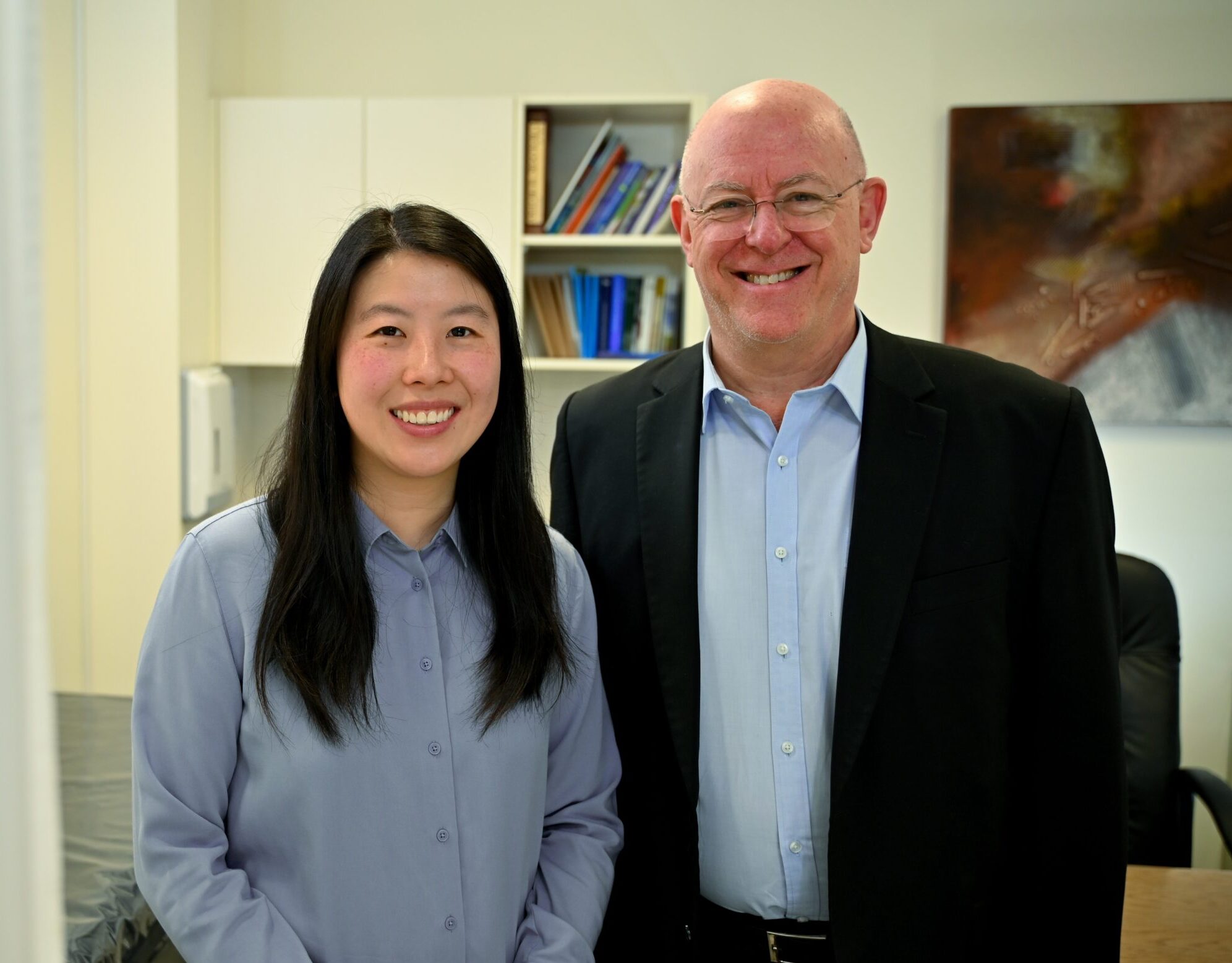

Diseases
Prostate Cancer

Approaches
Clinical Trials
Diagnostic Imagining
Disease Surveillance
Organoids and Spheroids
Xenograft Models
Surgical Methods
Theranostics

Research Themes
Integrative Cancer
Precision Medicine
Translational
Department Researchers
Principal Investigators
Professor Mark Frydenberg
Associate Professor Jeremy Grummet
Dr Uri Hanegbi
Dr Adam Landau
Associate Professor Daniel Moon
Associate Professor Weranja Ranasinghe
Dr Ross Snow
Associate Investigators
Dr Mitchell Lawrence
Professor Gail Risbridger
Associate Professor Renea Taylor
Research Fellow
Dr Darren Lam
Research Assistant
Ashley Baring
Interested in learning more?
Department Research Themes
Minimally Invasive Targeted Therapies
Through its commitment to patient-focused research, the Department of Urology has pioneered the application of several minimally invasive therapies for prostate cancer. This research focuses upon the development of targeted therapeutic approaches that aim to reduce the burden of adverse side-effects associated with non-specific and highly invasive interventions. Currently, the Department is involved in two collaborative research efforts: theranostics in early-stage prostate cancer; and Focal Therapy through the NanoKnife Platform. For each treatment, clinician researchers are contributing to the design, evaluation, and improvement of protocols for optimal implementation into clinical workflows and broader adoption into standard models of care.
AI-ML Enabled Patient Selection for Focal Therapy
The Irreversible Electroporation NanoKnife Platform is a Focal Therapy tool for prostate cancer that enables clinicians to greater localise surgical interventions. However, the effectiveness of this minimally invasive technique is limited by inadequacies in conventional patient selection approaches. Leveraging extensive libraries of clinical data, the Department has begun development of artificial intelligence and machine learning (AI-ML) algorithms capable of evaluating patient suitability for NanoKnife Focal Therapy. It is hoped that this model will also accurately determine the severity of the tumour, ensuring that patients receive the appropriate level of treatment, particularly for those with larger or more aggressive forms of prostate cancer.
Guided Diagnostic Imaging for Prostate Cancer
The complex biologies of prostate cancer tumours present difficulties for their diagnosis and disease staging. By combining 68Ga-PMSA-11 PET, a radiotracer drug, with MRI imaging, department researchers have developed a novel method that has been shown to overcome a number of these challenges. Preliminary results indicate that this radioactive guided diagnostic approach is capable of accurately identifying and assessing the disease progression of prostate cancer. This allows clinicians to determine the most appropriate type and level of treatment for their patients, while also reducing the need for unnecessary invasive procedures.
Patient-Derived Xenografts
In pursuit of next-generation therapies for prostate cancer, the Department of Urology has collaborated with the Monash Prostate Cancer Research Group Laboratory to develop MURAL, an extensive library of prostate cancer xenografts. These patient-derived xenografts involve the implantation of prostate cancer cells into animal models where they able to continue growth within a laboratory setting. By facilitating non-human drug testing, MURAL supports the evaluation of newly developed drugs, while also predicting patient responses to specific treatments for precision oncology applications.
Selected Publications
Christopher J Sweeney, Andrew J Martin, Martin R Stockler, Stephen Begbie, Leanna Cheung, Kim N Chi, Simon Chowdhury, Mark Frydenberg,* Lisa G Horvath, Anthony M Joshua, Nicola J Lawrence, Gavin Marx, John McCaffrey, Ray McDermott, Margaret McJannett, Scott A North, Francis Parnis, Wendy Parulekar, David W Pook,* Martin Neil Reaume, Shahneen K Sandhu, Alvin Tan, Thean Hsiang Tan, Alastair Thomson, Francisco Vera-Badillo, Scott G Williams, Diana Winter, Sonia Yip, Alison Y Zhang, Robert R Zielinski, and Ian D Davis
The Lancet Oncology, April 2023
Yash Khanna,* Vidyasagar Chinni, Kavitha Gnanasambantham, Richard O’Sullivan, Zita E. Ballot, Andrew Ryan, Shakher Ramdave, Dinesh Sivaratnam,* Patrick Bowden, Mario Guerrieri, Weranja K.B. Ranasinghe, and Mark Frydenberg*
BJU international, May 2023
Modern paradigms for prostate cancer detection and management.
Isabella Williams, Aoife McVey, Sachin Perera, Jonathan O’Brien, Louise Kostos, Kenneth Chen, Shankar Siva, Arun Azad, Declan G Murphy, Veeru Kasivisvanathan, Nathan Lawrentschuk, and Mark Frydenberg*
Medical Journal of Australia, October 2022
Arveen A. Kalapara, Zita E. Ballok, Shakher Ramdave, Richard O’Sullivan, Andrew Ryan, Badrinath Konety, Jeremy P. Grummet, and Mark Frydenberg*
European Urology Oncology, June 2022
* denotes Cabrini researcher