


Patient discovers the power of paper and paint
20/01/2026
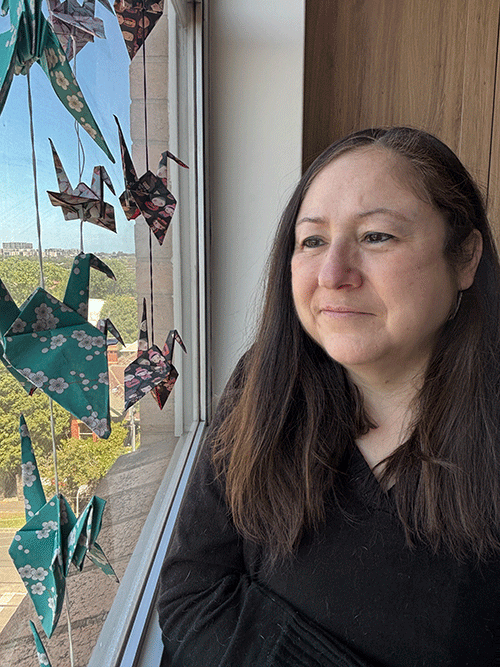
For Kristy Robinson, the news of fresh cancer lesions on her lung felt hopeless and she had no desire to take the fight up to the disease she’d already bravely fought for three years. That was until Kristy found hope in an “unlikely source”.
A mechanical engineer, Kristy had never been particularly creative, but art therapy, provided as part of her Cabrini palliative care, woke something inside the 46-year-old.
“I was ready to give up,” Kristy said. “I was diagnosed with bowel cancer in 2022, but it had spread to my liver, so I had treatments and it looked like I was all clear but then they found a recurrence in my lung.
“When I had a chance to beat the cancer, my attitude was good and I fought it, but when it came back, I felt defeated and hopeless and wanted to give up, but then I was introduced to art therapy with Anette, and it’s really helped change my perspective.”
Art therapy is a psychotherapeutic modality – a type of counselling session – Cabrini art therapist Anette Kulesza explained. Studies indicate that patients who engage in art therapy report substantial improvements in mood and anxiety levels.
“It can help patients to express difficult emotions that they might be sitting with, especially at the end of life,” she said. “But it can also be used as a form of relaxation – a form of diversion and a way of connecting to aspects of the healthy self. Some people also want to create legacy work for family members. And it’s beautiful when families get involved, too.”
Kristy describes creating artwork as a type of mindfulness, which has helped considerably with her health anxiety.
“Sometimes when I’m doing my art, feelings come out,” she explained. “I’ll be painting and then I start feeling emotions, like feelings of hope and love. It helps me to stay in tune with myself. And it’s been special to create pieces with my husband, Geoff.
“Art therapy has been so good for us both and we’ve even learned new things about each other.”
Kristy set herself an ambitious task to create 1000 origami cranes – a process that she has taken significant comfort in.
“I chose cranes because they symbolise peace and longevity,” she said. “And then read a story that said if you create 1000 cranes, you get a wish. The peace and longevity really hit home as to what I’m feeling and where I want to be.
“I was planning to stop at 1000, but the anxiety came back when I stopped doing them, so I’ve kept going, creating garlands for people and decorating my room and the nurses’ station on 4 South. I hope they bring peace and comfort to everyone who sees them.”
Kristy, who has also found immense benefits from music therapy, harp therapy and animal therapy as a Cabrini inpatient, continues to create art, even when she’s back at home.
“You’ve really inspired us to keep going with art,” a grateful Kristy wrote to Anette. “I’ve been getting some anxiety but have been using the origami cranes to keep on top of it. I’m very grateful for your care.”