


This is a face of bowel cancer too
26/10/2026
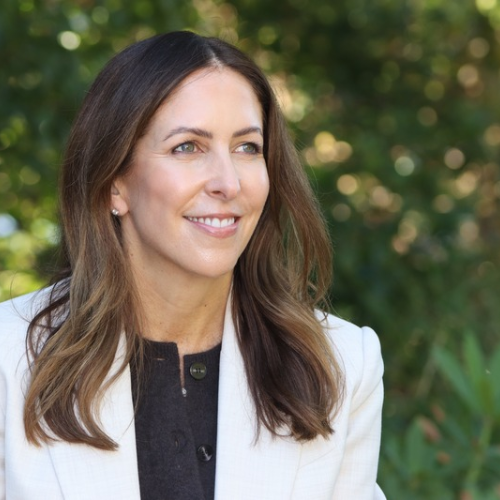
It’s easy to understand why Emily McGrath dismissed her bowel cancer symptoms as something less sinister. At 37, fit and healthy, she’d only ever seen older men represented as the face of the disease.
So, when Emily noticed a little blood in her bowel movements towards the end of 2018, she self-diagnosed it as haemorrhoids. She was tired and bloated, too, “but it was Christmas time, and who isn’t?” So, she kept going.
But in early January 2019, Emily had a significant bleed.
“That’s when I knew something wasn’t right,” she said.
A colonoscopy at Cabrini Malvern the very next day confirmed bowel cancer. It was Stage 3 and had spread to her lymph nodes.
“When you see an ad for bowel cancer or even on the testing kits themselves, the photo on the front is a 65-year-old man that looks nothing like you,” Emily said. “So, you just don’t associate it with yourself.”
What followed was a gruelling but successful course of treatment. Under the care of Professor Paul McMurrick, the Cabrini colorectal surgical team, and cancer specialists, Emily had a bowel resection, an ileostomy, and seven months of chemotherapy. In one year alone, Emily spent close to 80 nights in the care of the Cabrini Malvern and Hospital in the Home teams.
Her ileostomy was later reversed, and now, a very grateful Emily is in remission.
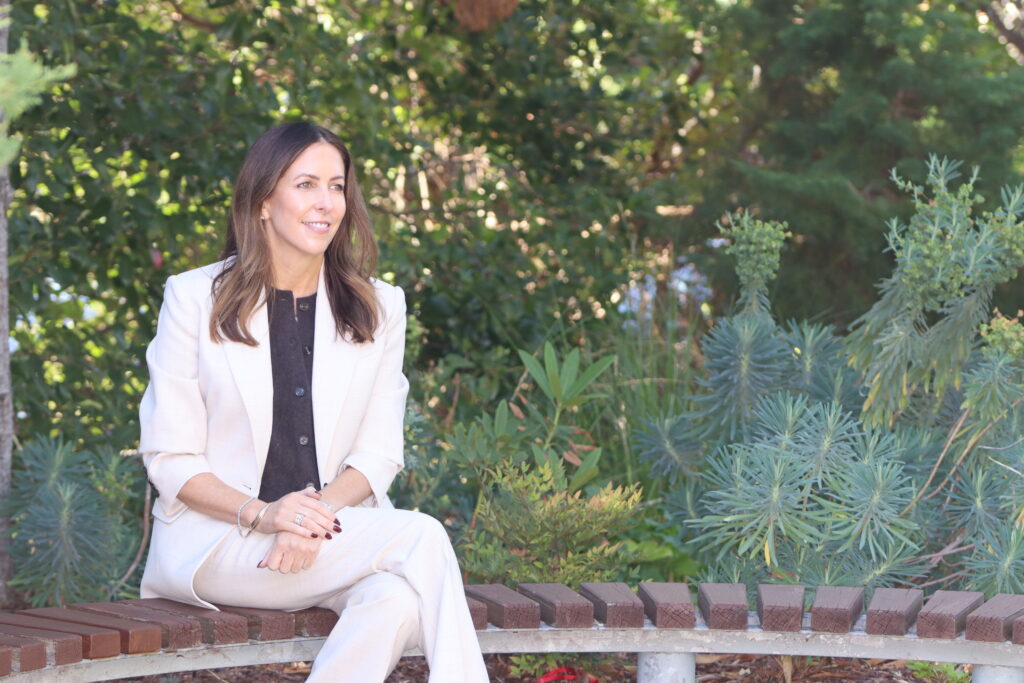
Emily McGrath in the Cabrini Memorial Garden (Above)
“I’m a planner by nature, so during my diagnosis and treatment, I focused on what I could control – getting the best team around me and doing exactly what they told me,” Emily said.
“I wasn’t always an easy patient, but Paul was upfront from the start. He couldn’t tell me everything that would happen, but I trusted the process and I trusted my team and that gave me comfort.”
Emily had no family history of bowel cancer and no obvious risk factors. Like many cases of early-onset bowel cancer, hers was simply unexplained, and was one of a growing number across Australia that don’t fit the traditional profile.
Looking back, she’d been experiencing intermittent bleeding for about three months before her diagnosis, but she’d previously had haemorrhoids and the symptoms were similar.
It’s a pattern Cabrini clinician-researcher Prof Paul McMurrick, Chair of the Cabrini Monash University Department of Surgery and a leading advocate with Let’s Beat Bowel Cancer, recognises all too well. The Cabrini-Monash bowel cancer database, which he established in 2010, and which now tracks nearly 8000 patients, has documented a sharp rise in bowel cancer among Australians under 50.
“Nearly 2000 Australians under the age of 50 now develop bowel cancer each year,” Prof McMurrick says. “These early-onset cancers tend to be diagnosed at more advanced stages, making early detection through screening critically important.
“Australians in their 40s are at the peak of their lives, with young families and dependents. We can no longer ignore these numbers.”
Australia’s National Bowel Cancer Screening Program currently sends free, easy-to-use home screening kits to Australians aged 50 to 74 every two years. Australians aged 45 to 49 must actively request their first kit. It’s a two-tier approach that Prof McMurrick says has failed younger Australians, with only a fraction of those eligible requesting a kit since the opt-in system launched in July 2024.
Let’s Beat Bowel Cancer is now calling for the Program to be extended to encourage Australians above the age of 30 to be aware of the symptoms of bowel cancer, and to seek early assessment by their GP if they develop symptoms of concern, including change in bowel habit, bleeding from the bowel, unexplained weight loss or abdominal pain.
“We know that when detected early, more than 90 per cent of bowel cancer cases can be successfully treated,” Prof McMurrick said. “We also know that the opt-in model isn’t perfect and that when we automatically send kits to people, we see much higher participation. We think younger Australians deserve the same proactive approach.
“For now, though, we are encouraging people between 40 and 45 to consider using the FOB (Faecal Occult Blood) test kit each 12 months, even if the program doesn’t provide it. It’s inexpensive, easy to use and available at pharmacies.”
Emily is also a passionate supporter of the push.
“Lowering the screening eligibility age is one thing, but then people also need to actually use the kit,” she said. “It’s not the most glamorous thing to think about, but it’s so easy. And if it finds something early, your treatment will be so much simpler than what I went through.”
Almost eight years on, Emily is doing well and keen to share her story so no one has to go through what she did.
“When I was diagnosed, it had an immediate ripple effect on the people around me, on my friends and family, and many of them went out and had colonoscopies and became more aware,” she said. “I can’t do that for everyone. But if my story means just one person decides to get checked, that’d mean everything to me.”
Emily has a simple message to anyone who has a symptom they’re not sure about.
“Act on it straight away,” she said. “A simple test could mean avoiding the surgery, the chemo, all of it. The treatment for this can be really straightforward if it’s caught early. Don’t talk yourself out of it like I did.”
Prof McMurrick agrees.
“Use your free screening kit,” he said. “If you’re between 50 and 74, a kit should arrive in the mail every two years. Don’t ignore it. If you’re 45–49, request a kit.
“Definitely don’t dismiss any symptoms, including rectal bleeding, unexplained fatigue, bloating, or changes in bowel habits. Talk to your doctor regardless of your age and Let’s Beat Bowel Cancer together.”
If you meet the eligibility requirements, you can request your free bowel cancer screening kit at www.health.gov.au/nbcsp.